

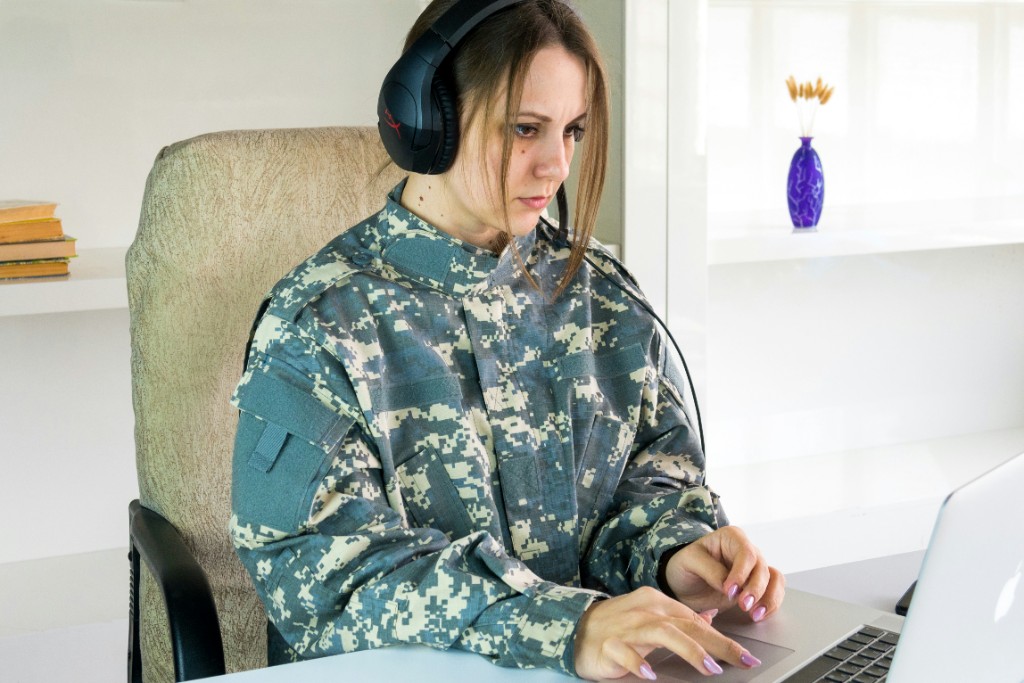
What are military romance scams?
A military romance scam is a form of online fraud where a scammer poses as a deployed soldier to extract money or cryptocurrency from victims. The scammer creates a fake profile using AI-generated images or photos of a real service member, often claiming to be a widower with a child or a high-ranking officer on a secret mission.
Once the victim is emotionally invested, the scammer invents a crisis that requires money. They may claim they need funds to pay for “leave papers” to visit the victim, to buy a satellite phone, or to ship a box of gold found during a raid.
The requests are always urgent and require untraceable payment methods like gift cards, wire transfers, or cryptocurrency. These scams manipulate the victim’s respect for the military and their desire for companionship, often resulting in significant financial loss.
To be clear, a service member never requires outside financial assistance for any reason while deployed. The military covers travel expenses to and from the combat zone, approves leave based on necessity or merit, and provides all communication services.
Any property seized during military engagements is property of the United States government, and it is illegal for soldiers to take ownership of assets such as gold or cash. Unfortunately, absconding with a box of gold during a raid is the stuff of movies, not real life.
Why are military romance scams so common?
Military romance scams are one of the most common form of online romance scam. One analysis of 50 romance scammers revealed 12% posed as military service members. The FTC claimed that being deployed overseas was the third most common excuse among romance scammers in 2023. Scammers choose this tactic for a number of strategic reasons:
- The soldier persona builds immediate trust, authority, and an air of romance. Many civilians are conditioned to respect men and women in uniform. Soldiers are often assumed to be honorable, disciplined, and truthful. The danger of their work and role as protector can make them especially appealing as partners to some victims.
- Their deployment provides a built-in excuse for not meeting. While many scammers have to hunt for reasons why they can’t video chat or meet in person, military romance scammers can claim to be in a combat zone, preventing the use of internet or travel arrangements.
- The scam isolates the victim. Scammers often claim their mission is secret or dangerous, discouraging victims from telling friends or family about the relationship because it could compromise their safety.
How do military romance scams usually start?
Most military romance scams begin when a scammer using AI-generated or stolen photos messages the victim on social media platforms, or on dating apps. Common introductions are polite and respectful, embodying the persona of the honorable warrior. They frequently mention God, faith, or family values early in the conversation to portray a wholesome and trustworthy veneer.
If the victim responds, the scammer moves quickly to take the conversation off the dating site or social media platform. Though they aren’t perfect, dating sites have protections in place to detect scammers, while encrypted messaging services make it much more difficult to identify scam activity.
After moving to a private chat, the relationship escalates quickly. Scammers employ “love bombing” tactics, referencing a shared destiny or a “soulmate” level connection. This overwhelming attention rapidly creates emotional dependency that will soon be leveraged for the scammers’ financial gain.
The scammers’ narrative also primes the victim for the inevitable financial ask. The scammer always claims to be “deployed” on a peacekeeping mission in a dangerous or classified location, often in the Middle East. The danger and secrecy heighten the stakes of the relationship further, lending an air of mystery that make otherwise illogical scenarios more believable.
What are the most common military romance scam stories?
Military romance scammers work from scripts. These scripts are designed to test a victim’s willingness to pay. If any of the following stories appear, stop communicating immediately.
Will a commanding officer email about a soldier’s leave?
No, they never will. Commanding officers in the U.S. military do not communicate with the girlfriends, fiancées, or even spouses of soldiers regarding leave requests. Leave is an administrative process handled internally by the soldier and their chain of command, never through email negotiations with civilians.
Despite this, one of the most convincing tactics used in military romance scams is the introduction of a “Commanding Officer” or “General” into the conversation. The scammer will claim that he cannot request leave himself due to his rank or deployment status, and that the victim must email his superior to make the request on his behalf. This request is designed to make the victim feel involved in his official life and to legitimize the upcoming financial demand.
When the email is sent, a prompt reply will arrive from an address that looks official at first glance, such as [email protected] or [email protected]. The email will likely be poorly written, with grammatical errors and strange formatting, but it will be authoritative in tone. It will attach a fake form requiring personal details and, inevitably, a fee for “processing,” “replacement troops,” or “transportation.”
Remember: no U.S. military official uses a public email domain like Gmail, Yahoo, or Outlook for official business; all legitimate correspondence comes from a .mil address. The person replying to that email is simply the scammer logging into a second account to manipulate the victim further.
What are common military scammer phrases?
Military romance scammers use the same phrases consistently regardless of the victim they’re targeting. Knowing which phrases are common to military romance scams can help victims identify their situation before they send money or crypto. It can also be useful if they’re considering seeking legal representation.
| What they say | What it really means | What to do |
|---|---|---|
| ”You need to email my commander.” | The scammer is creating a secondary source of legitimacy. | Stop engaging and do not email anyone on their behalf. |
| ”My mission is classified, so I cannot tell you much.” | The scammer is leveraging their scripted narrative to avoid verification. | Ask for verifiable facts like unit, MOS, and home station. |
| ”I cannot video chat for security reasons or inconsistent internet.” | The scammer can’t fake live video, or is buying time to set it up. | Treat refusal or repeated excuses as a major red flag. |
| ”I just need a small fee for leave papers, shipping, or communications.” | The scammer is testing for compliance. The asks will only get bigger. | Do not send money, gift cards, wires, or crypto. |
| ”If you loved me, you would help.” | The scammer believes you are close to finding them out and is switching tactics. | Reality-check the story with a trusted person. |
What are the biggest red flags in a military romance scam?
While scammers constantly evolve their scripts, certain red flags remain consistent across nearly all fraudulent military profiles.
- Refusal to video chat. Scammers will claim “security protocols” forbid video calls, or that their camera is broken. In 2026, even soldiers in remote outposts can usually manage a brief video call or send a personalized video message. If a face is never seen moving and speaking in real-time, the person is likely using stolen photos.
- Requests for untraceable money. The most definitive red flag is the method of payment requested. Scammers will invariably ask for Bitcoin, gift cards (Apple, Steam, Google Play), or wire transfers. The U.S. military does not process leave requests, medical bills, or any official business via iTunes cards or cryptocurrency.
- English is “off.” The scammer often claims to be a U.S.-born citizen from a specific state like Texas or Ohio, but their messages may contain strange grammar, misuse common American idioms, or have a cadence that sounds foreign. While typos happen to everyone, consistent linguistic errors from a supposed native speaker are a strong indicator of a foreign actor.
As a general warning, it is important to remember that these tells are becoming less obvious in the age of AI. Victims may find that scammers are in fact willing to video chat, but they may be using deepfake video technology, which can virtually impersonate another person’s likeness in real time.
AI translation through ChatGPT, or even more advanced versions of Google Translate, are becoming more convincing as well. The victim’s ability to spot a military romance scam lies in identifying the pattern that nearly all these scams follow. Due to AI, this pattern recognition is swiftly becoming the only reliable way to identify scam activity.
How to verify whether someone is actually in the military
Verifying a service member’s identity can be challenging due to privacy and security regulations, but there are several reliable methods to uncover a fake profile. Scammers rely on the victim’s lack of knowledge about military protocols to maintain their deception. By asking specific questions and using publicly available tools, the facade can be broken.
Do they have a .mil email address?
If the person claims to be a high-ranking officer or a deployed soldier, ask them to email from their official military account. All U.S. military personnel are issued email addresses ending in .mil. This is a secure, government-issued communication channel that only verified service members can access.
Scammers will often make excuses to avoid this, claiming they “can’t use it for personal mail,” “it’s classified,” or “the server is down.” These are lies. Soldiers can and do use their official email for personal correspondence, and refusing to do so—or being unable to do so—is a major warning sign. If they cannot send a simple email from a .mil address, they are not in the U.S. military.
Can they answer specific questions about their unit?
Ask specific, detailed questions about their service that a real soldier would know instantly but a scammer would struggle to invent convincingly.
- “What is your MOS (Military Occupational Specialty) code?” (e.g., 11B for Infantry, 68W for Combat Medic)
- “What unit are you attached to?” (e.g., 1st Battalion, 506th Infantry Regiment)
- “What base is your home station?” (e.g., Fort Campbell, Kentucky)
- “Where did you go for Basic Training?”
Scammers often give vague, movie-style answers like “Special Ops,” “Peacekeeping Force,” “Classified Mission,” or “US Army Base in Syria” to avoid being caught in a lie. They may also get angry or defensive when asked for specifics, claiming the victim doesn’t trust them.
A real soldier will be able to provide these specific details without compromising operational security, as unit designations and MOS codes are generally not classified information.
Military Verification Checklist
Use this checklist to evaluate whether the person you are speaking with is a real service member or a scammer.
Real Soldier vs. Scammer
⚠️ Warning: Never send a photo of your own ID or passport to "verify" yourself to them. Scammers use these to steal your identity.
What to do if money was sent to a military romance scammer
If a victim realizes they have been scammed, the shame can be overwhelming. They may feel like they’ve lost both their money and a relationship they valued. But quick action is essential to mitigate the damage and potentially aid in recovery.
- Stop all contact immediately. Do not accuse the scammer or demand a refund, as they will simply deny it or try to manipulate the situation further. Block them on every platform, email address, and phone number used to communicate.
- Report the scam.
- File a complaint with the FBI Internet Crime Complaint Center (IC3) at ic3.gov. This creates an official record of the crime.
- Report the profile to the social media platform or dating site where the meeting occurred to prevent them from targeting others.
- Preserve the evidence. Do not delete the conversation history. Take screenshots of the profile, the messages, the email from the “Commander,” and, if crypto was involved, the transaction receipts or wallet addresses where money was sent. This evidence is crucial for law enforcement and potential legal action.
- Contact a U.S.-based, licensed crypto recovery attorney. If significant funds were sent via cryptocurrency (Bitcoin, USDT, ETH), recovery may be possible through blockchain tracing and civil litigation.
Victims are not alone. Thousands of intelligent, caring people are targeted by these organized criminal rings every year. The person they fell for wasn’t real, but the crime committed against them is—and there are ways to fight back.
If you do contact a crypto recovery attorney, it is essential that you verify their credentials before entering into any sort of agreement. Anyone claiming to be a “recovery agent”, or “recovery service” is not to be trusted.
A real law firm, like CyberJustice Law Group, will never direct message you via social media, will never ask for crypto as payment, and will provide state bar licenses for all their attorneys upon request. If you want to find out whether your case is eligible for recovery, schedule a free video consultation.